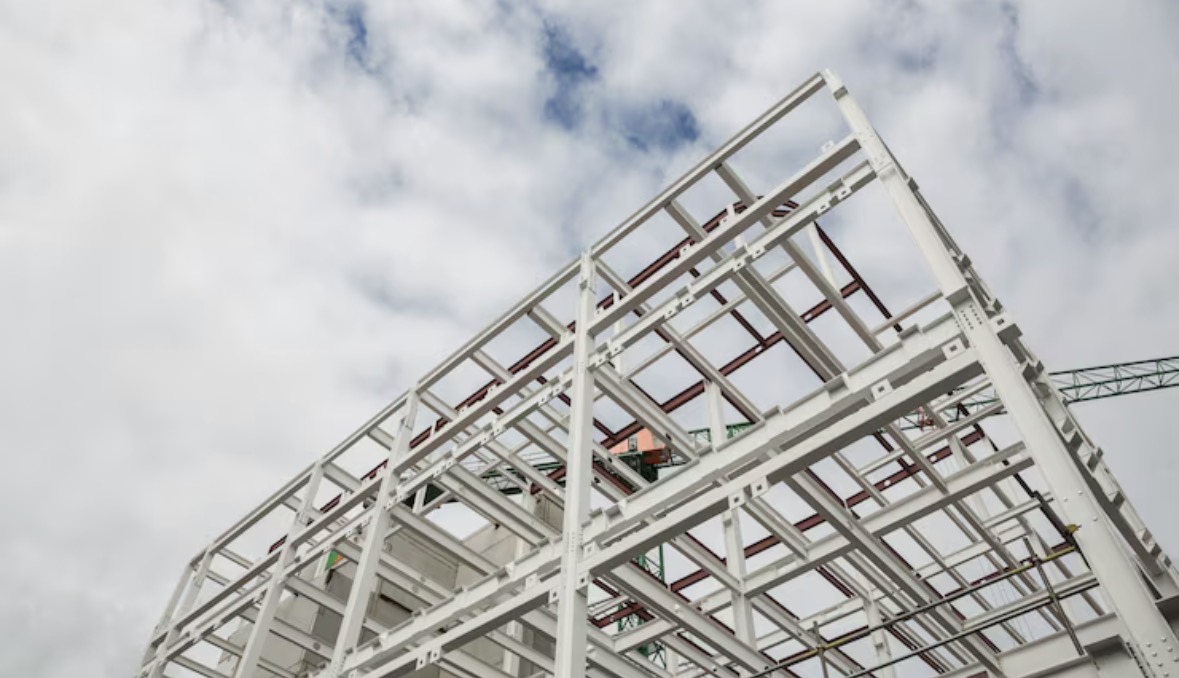
Long buildings and later additions move, and a roof that cannot move with them will eventually tear.
A building looks fixed in place, but it is not. Concrete, steel and masonry all expand when warm and shrink when cold. They also settle, creep and sway. On a short building, those movements are small enough that nobody notices. On a long warehouse, a school with several wings or a mall that has had additions bolted on over the years, they add up.
The roof sits on top of all that motion. A membrane is a continuous skin, and it has to be built to allow the structure beneath it to move without being torn. That is the job of an expansion joint. This article explains why buildings move, how joints are put into the roof, what failure looks like and why Calgary’s temperature swings make the problem harder.
Why long buildings and additions move
Every building material changes size with temperature. A steel deck or a concrete slab that runs the length of a big warehouse will grow in July and shrink in January. The change in length is small compared with the whole, but a membrane that is fixed rigidly across it sees all of that movement concentrated at one point.
Structural designers handle this by splitting large buildings into sections with a gap between them. Each section can move on its own. The gap is the building’s expansion joint, and the roof has to cross it. Additions create the same condition by accident. When a new wing is built against an old one, the two parts settle differently and respond differently to temperature. The seam between them becomes a line of movement, whether or not anyone planned it.
How a joint is built into the membrane
The roof expansion joint is not a gap in the membrane. It is a flexible detail that allows the structure to open and close while the waterproofing stays continuous. A common build uses a raised curb on each side of the structural gap, with a flexible bellows or loop of membrane running between them. The loop has enough slack to stretch when the gap opens and fold when it closes.
Some joints include a compressible insulation filler under the loop, a cover plate on top to shed water and a metal flashing on each curb. Others use a prefabricated expansion joint cover made for the specific membrane type. The right detail depends on how far the structure is expected to move, and the membrane manufacturer will have specific drawings for it. A joint built from improvised parts, or from a detail copied from another building, often fails in the first hard winter.
The Calgary temperature swing
Calgary asks a lot of a roof joint. A cold snap can hold temperatures far below freezing for days. A Chinook can follow it within hours and push the air well above freezing. Then the cold returns. A membrane and the structure under it can go through a large temperature change several times in a single winter, and each swing makes the joint open and close.
Dark membranes in direct sun add another layer. On a clear winter day, the surface can be far warmer than the air. At night it drops back. The surface of the roof moves more than the structure inside, and cold membranes also stiffen, which makes them less able to stretch. A joint that works comfortably in summer may be at its limit in January. Good design allows for the full range, and good maintenance checks the joints after cold periods.
Failure signs: splits, bridging and tenting
Three patterns tell you a joint is in trouble. Learn to recognize them from the roof surface.
- Splits: a tear in the membrane that follows the line of the joint, often at a corner or where the membrane turns up a curb. Splits are the clearest sign that the joint has run out of slack.
- Bridging: the membrane stretches tight across the joint instead of forming a loop. It has no slack to give, and it is loaded in tension all the time. A bridged membrane will usually tear on the first big movement.
- Tenting: the membrane lifts away from the substrate near the joint, forming a tent shape. It means the membrane was pulled while the joint was open and then pushed up when the joint closed.
Also look for sealant that has pulled away from the metal, cover plates that have shifted, and staining on the ceiling directly below the joint line. Any of these deserves a closer look.
Where the problems hide
Joints fail most often at the places where they meet something else. The point where a roof joint meets a parapet wall is one. The membrane has to turn the corner, cross the joint and run up the wall, all in a few inches. Any shortcut in the corner detail shows up first. Where a joint runs into a rooftop unit curb, a drain or a pipe, the detail gets crowded, and crowded details fail.
Older buildings have another problem. Roofs get replaced over the years, and each new layer or new insulation board covers the original joint detail. A joint that was designed for a thin roof may end up buried under a thicker assembly, with the curb no longer tall enough to shed water. If your building has had more than one reroof, ask for the original expansion joint drawings.
What to ask when a joint needs attention
If you have found a split or a bridged membrane, the fix is rarely a patch. A patch over a moving joint will split again, because it does not address the cause. Ask your roofer to assess the actual movement. How wide is the gap in winter and in summer? Was the original joint sized properly? Is the curb high enough?
A lasting repair normally involves reforming the joint with a proper loop of membrane, replacing damaged insulation filler and flashing both curbs. Ask the contractor to follow the manufacturer’s detail for your membrane, and ask for the warranty implications in writing. If the building has changed since the roof was installed, ask whether the joint location still matches the structure beneath.
How to inspect a joint line yourself
You can learn a lot about a joint in ten minutes with a camera and a flashlight. Pick a calm, dry day, and pick one in winter if you can, since that is when the gap is widest and the membrane is under the most tension.
Walk the joint from one end to the other. At each curb, look at the membrane where it turns up and check that it sits flat against the wall without pulling. Look at the loop in the middle. It should have a visible sag or fold, not a flat, tight line. Run a gloved hand along the metal cover and see whether it moves freely or has jammed. A cover that has seized can tear the sheet beneath it the next time the gap changes.
Photograph the joint from the same spots each season. Compare the photos from fall and winter and note how much the position of the cover plate has changed. A joint that looks almost identical in both seasons might not be moving at all, which suggests it is stuck. A joint that moves a great deal and shows damage may be undersized. Either finding is worth passing to your roofer, along with the dated images, so the next visit starts with facts instead of guesses.
One more habit helps. After any unusually cold stretch, walk the joint again and look for new hairline cracks in sealant or small changes in the cover plate. Catching a problem when it is a hairline costs very little. Catching it after a thaw has pushed water into the insulation below costs a good deal more.
Plan for movement, because the building will
Large roofs do not fail because someone forgot the membrane was there. They fail because the structure moved and the roof was not built to move with it. The signs are visible if you walk the joint lines each spring and fall and look for splits, tight membrane and lifted sheet.
Expansion joints behave differently depending on the membrane that crosses them, so it helps to understand your options before a replacement. A clear overview of how TPO, EPDM and SBS membranes in Calgary handle movement and cold will help you ask better questions of your contractor, and make sure the joint detail in the specification is matched to the material you choose.
About the author: this article was contributed by the team at Superior Roofing in Calgary, where Red Seal journeymen and Euroshield-certified installers build and repair commercial roof systems, including the joints and transitions that large buildings depend on.