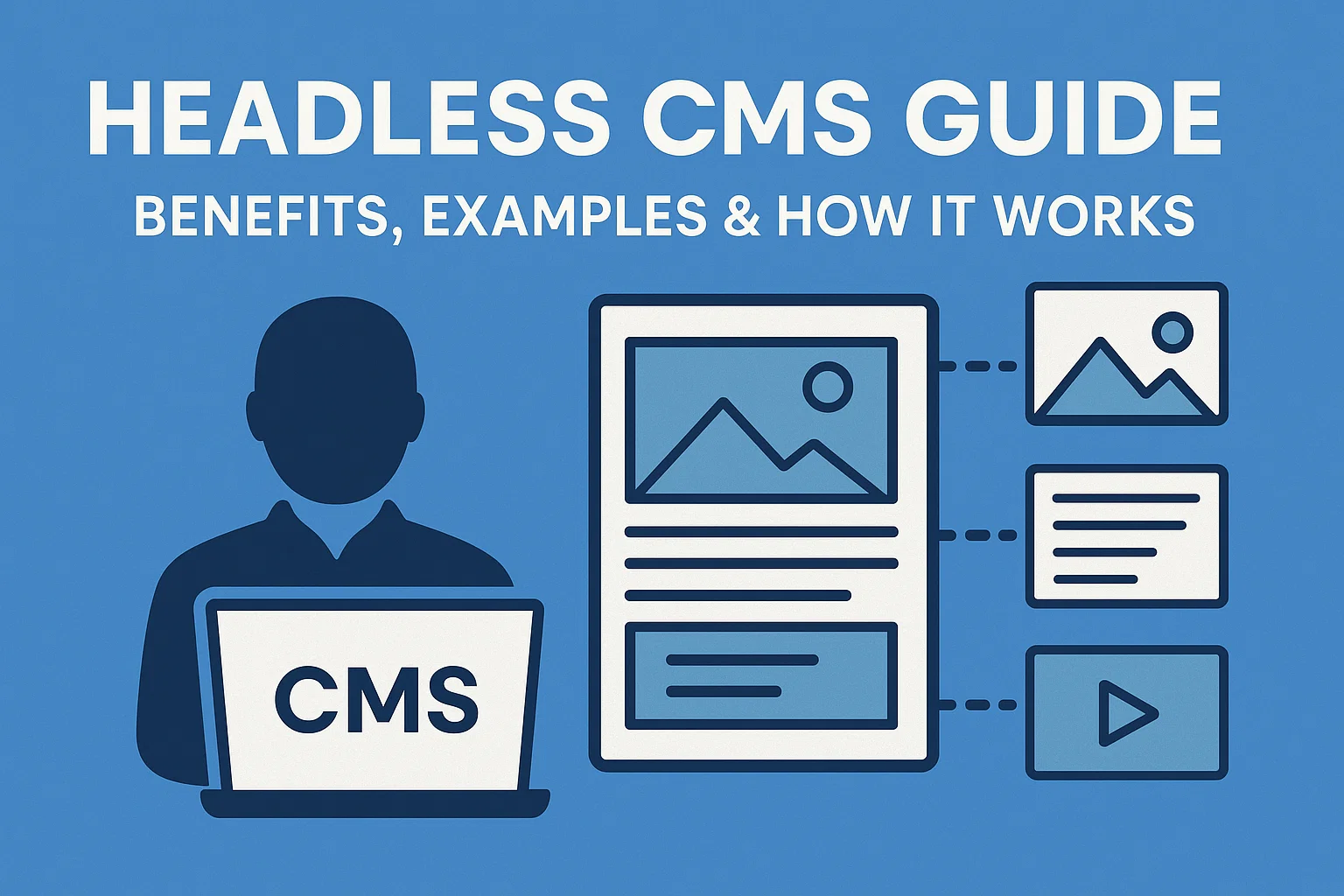
A Headless CMS is rapidly becoming the core of modern digital content delivery. Unlike traditional CMS platforms, a headless CMS separates content storage from content presentation—giving brands more flexibility, speed, and scalability. This article explains what this type CMS is, how it works, and why it’s transforming SEO and omnichannel content strategies.
What Is a Headless CMS?
A Headless CMS is a backend-only content management system where the “head” (frontend layer) is removed. Content is delivered through APIs—typically REST or GraphQL—making it possible to publish the same content across websites, apps, smart devices, and digital screens.
This aligns with SEO principles like keyword prominence, which you can learn more about in our guide on
👉 Keyword Prominence: The Overlooked On-Page SEO Signal
How a Headless CMS Works
This CMS works in three core steps:
- Content is stored and structured in a backend repository
- APIs deliver this content to any platform
- Developers build any frontend (React, Vue, Next.js, mobile apps, etc.)
Because the frontend and backend are decoupled, the system becomes tech-agnostic, future-proof, and optimized for SEO-friendly site performance.
Headless CMS vs Traditional CMS
1. Architecture
- Traditional CMS (WordPress, Drupal):
Coupled backend + frontend - Headless CMS (Contentful, Strapi, Sanity):
Backend separated, frontend custom-built
2. Flexibility
- Traditional: Template-based
- Headless: Fully customizable
3. Multichannel Publishing
- Traditional: Mostly websites
- Headless: Websites, apps, IoT, digital screens, smart devices
4. SEO Performance
This specific CMS sites typically load faster due to static generation and modern frameworks—improving LCP, CLS, and overall Core Web Vitals.
Benefits of a Headless CMS
1. Future-Proof Content Structure
Because content is API-driven, it can be reused across new platforms without migrations.
2. Better SEO Performance
Headless architecture pairs well with modern frameworks like Next.js, giving excellent speed and technical SEO capabilities.
For deeper SEO understanding, explore:
👉 Keyword Density, Prominence & Proximity
3. Higher Security
No direct connection between backend and frontend reduces attack surfaces.
4. Scalability
Perfect for high-traffic websites, CMS platforms work well with serverless and CDN-first deployments.
5. Clean Developer Workflow
Developers can use any technology for the frontend without CMS limitations.
Common Use Cases of a Headless CMS
- E-commerce product distribution
- Multichannel content publishing
- SaaS websites requiring speed
- Mobile and web app content sync
- Large publishing and media websites
- Multilingual platforms
Popular Headless CMS Platforms
- Contentful
- Sanity
- Strapi
- Storyblok
- Prismic
- Ghost (headless mode)
When to Choose this type of CMS
Use them when:
✔ You want omnichannel content distribution
✔ You want maximum performance and SEO speed
✔ You are building on React, Vue, Svelte, or Next.js
✔ You need global scaling and multilingual content
✔ You want separation between content teams and developers
Some simple blog or small website may still benefit from a traditional CMS—depending on complexity and resources.
Challenges of a Headless CMS
- Requires development expertise
- Longer initial setup
- Multiple systems (frontend + backend) to manage
However, the long-term ROI is usually significant.
Conclusion
A Headless CMS offers unmatched flexibility, future-proof architecture, and powerful SEO performance advantages. It’s ideal for brands looking to scale content across multiple channels while maintaining speed, security, and custom design freedom.
If you’re planning to future-proof your digital experience, this CMS is one of the smartest investments you can make.